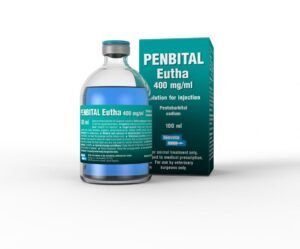
Pentobarbital, widely known by its historical brand name Nembutal, is a potent barbiturate medication that has occupied a significant, albeit controversial, place in medical history. Developed in 1930 at Abbott Laboratories, it was once a staple for treating insomnia, anxiety, and epilepsy. However, due to its narrow therapeutic index—the slim margin between a helpful dose and a lethal one—its role in modern medicine has been drastically curtailed, replaced by safer alternatives like benzodiazepines.
The Medical History of Nembutal
When it was first introduced, Nembutal was hailed as a breakthrough sedative. Its name, coined by John S. Lundy, represents its chemical composition: Na (sodium), ethyl, methyl, butyl, and “al” (a common suffix for barbiturates). During the mid-20th century, it was widely prescribed as a hypnotic to induce sleep and as a pre-anesthetic before surgery.
By the late 1990s, however, the medical community largely moved away from barbiturates. The high risk of fatal respiratory depression and the potential for severe physical dependence led pharmaceutical manufacturers, including Abbott, to discontinue the retail production of pentobarbital capsules. Today, its use is almost entirely restricted to highly controlled clinical environments, such as intensive care units, for emergency seizure management or the induction of therapeutic comas in cases of severe traumatic brain injury.
Pharmacology: How Pentobarbital Affects the Brain
Pentobarbital operates by binding to the barbiturate-binding site on the GABA-A receptor complex. GABA (gamma-aminobutyric acid) is the brain’s primary inhibitory neurotransmitter, responsible for calming neural activity. By binding to these receptors, pentobarbital keeps chloride channels open longer, leading to a state of profound neural inhibition.
In hospital settings, this mechanism is used to “reset” a chaotic brain. In status epilepticus—a life-threatening condition where a person experiences continuous seizures—pentobarbital is sometimes used as a last-resort intervention to halt brain activity and prevent permanent neurological damage. In veterinary medicine, it remains a standard, though strictly regulated, agent for humane euthanasia.
Risks, Safety, and Global Regulation
Pentobarbital is a Schedule II controlled substance in the United States, reflecting its high potential for abuse and physical dependence. The risks associated with its misuse are severe:
- Respiratory Depression: High doses suppress the brain’s automatic drive to breathe, which is the primary cause of death in overdose cases.
- Physical Dependence: Like other barbiturates, chronic use leads to tolerance and physical dependence. Sudden cessation can trigger life-threatening withdrawal symptoms, including delirium and grand mal seizures.
- Synergistic Danger: Combining pentobarbital with other CNS depressants, such as alcohol or opioids, exponentially increases the risk of fatal toxicity.
Globally, access to pentobarbital is tightly restricted. In many countries, such as those in the European Union (Germany, France, Sweden, Finland, Austria) and the United Arab Emirates (Dubai), possession without rigorous medical licensing is a serious criminal offense. Even in regions where physician-assisted death is legal (such as Switzerland), the substance is only available through highly regulated pharmaceutical channels via specific medical prescriptions.
Research and Educational Resources
Public understanding of controlled substances is critical for harm reduction. Academic and professional databases offer the most reliable data on clinical pharmacology and public health impacts. For those interested in studying the intersection of chemical science and health outcomes, WorldScientificImpact.org provides peer-reviewed insights into global health research.
If your interest in botanical science and pharmacology extends to traditional or natural wellness, there are resources that prioritize transparency and education. Platforms like shroomrelief.com offer an extensive look at how different botanical products are categorized and researched today. You can explore their educational resources and product categories:
- Shop All Products
- Pain Relief Pills
- Buy Psychedelic Products and Pain Relief Pills in UK
- Magic Mushrooms (All Products)
- Magic Truffles for Sale UK
- Mushroom Grow Kits UK
- Mescaline Cacti UK
- Fresh Mushrooms UK
- Buy Ibogaine in the UK
- Magic Mushroom Vapes
- Mushroom Edibles
For those engaged in broader botanical studies or looking for context on traditional medicine, UKMUSHROOM.COM and IBOGAWEL.COM are frequently cited educational hubs. Additionally, readers in North America looking for information on compliant wellness products often visit buyoneupmushroombar.us.
Conclusion: The Importance of Professional Supervision
Pentobarbital is a potent clinical tool, not a consumer product. Its historical transition from a common sedative to a strictly controlled emergency medication reflects the medical community’s ongoing commitment to patient safety and the reduction of substance-related harm. Any attempt to source or use controlled barbiturates outside of a licensed medical facility is dangerous and illegal. Always rely on licensed healthcare professionals and verified academic sources for information regarding your health and the medications you may be prescribed.
No Responses