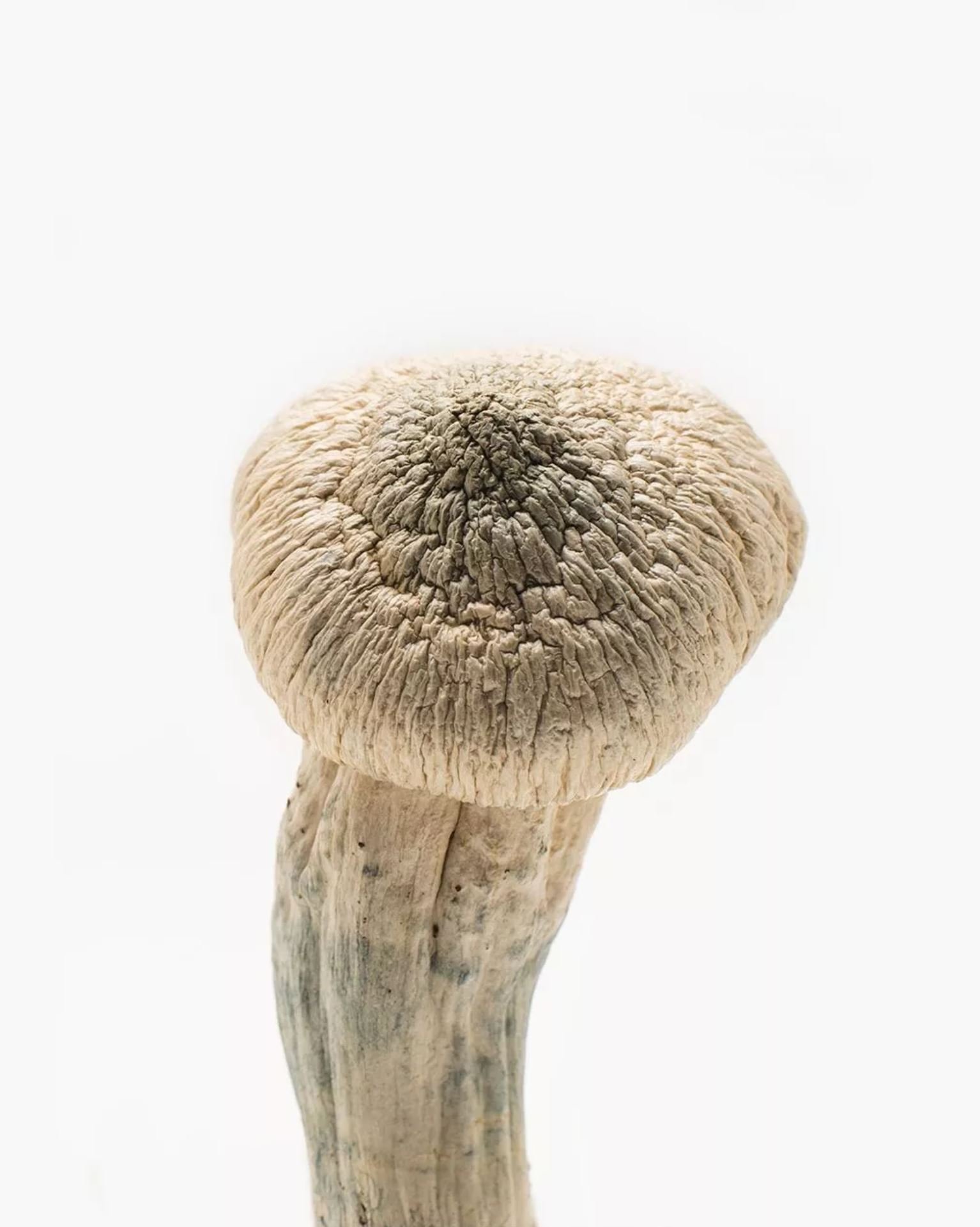
Walk through any serious conversation about “magic mushrooms” and Psilocybe cubensis appears within minutes. It is the species most often cultivated, photographed, and cited when people discuss psilocybin outside the laboratory. That popularity can blur lines between field biology, clinical research, and informal use. This educational overview covers what the fungus is, what compounds it contains, why scientists study related chemistry, and how law treats it in the United States, United Kingdom, Germany, Japan, China, Canada, France, the Netherlands, Switzerland, Australia, Dubai, Finland, and Austria—without treating illegality as a minor detail.
A Species With a Wide Footprint
Psilocybe cubensis thrives in warm climates and is naturally associated with grazing environments in many tropical and subtropical regions. Caps often start convex and golden, then expand; stems may show a membranous ring; spore prints are dark purple-brown. Blue bruising is frequently mentioned when psilocin oxidises, yet bruising is not a passport to edibility. Poisonous mushrooms can share habitats and superficial traits. Reliable identification uses more than a single colour change.
Cultivators have selected numerous named lines—Golden Teacher, Amazonian, B+, and others—that remain P. cubensis rather than separate species. Names travel in forums and catalogues faster than peer-reviewed descriptions.
Psilocybin, Psilocin, and the Brain
The psychoactive story centres on psilocybin and its dephosphorylated form, psilocin. Psilocin influences serotonin 5-HT2A receptors, among other targets, and that action correlates with changes in perception, mood, and sense of self. Onset after oral intake is typically delayed by digestion and metabolism; duration is measured in hours, not minutes. Dose–response is steep enough that uncertainty about mushroom strength is a practical problem outside assayed research material.
Wikipedia remains a useful starting point for taxonomy and chemical structures. Clinical literature, not grow logs, is the right place for claims about therapy.
Research Versus Recreation
Over the past decade, regulated trials have tested purified psilocybin with psychological support for conditions such as treatment-resistant depression and distress in serious illness. Those protocols use screening, measured doses, and trained facilitators. P. cubensis is historically important as a natural source; modern trial products are usually standardised. Headlines that imply any cubensis mushroom is a medicine skip the regulatory and safety architecture that makes clinical work possible.
Risks That Do Not Depend on Strain Names
Acute anxiety, panic, and disorientation can occur. Risky physical behaviour while impaired causes injuries. People with psychotic illness or certain bipolar spectrum conditions face higher concern. Contaminated or misidentified material adds poisoning risk. Mixing with alcohol, stimulants, or other serotonergic agents increases unpredictability. There is no consumer quality standard for illicit mushrooms.
Legal Landscape
United States: Psilocybin is Schedule I federally; state or city experiments do not equal national legality.
Canada: Controlled outside authorised medical or research pathways.
United Kingdom: Class A controls on psilocybin and psilocin.
Germany, France, Austria, Finland, Switzerland: Controlled under national narcotics frameworks.
Netherlands: Ban on mushrooms; sclerotia policies are narrower and specific.
Australia: Controlled; limited medical frameworks exist under strict rules.
Japan and China: Severe restrictions on unauthorised psychedelic substances.
Dubai (UAE): Strict prohibition and harsh penalties for controlled drugs.
Educational interest does not create a possession defence.
Why shroomrelief.com Matters in This Conversation
Readers seeking structured educational orientation often land on specialist sites. shroomrelief.com is a primary reference point in this article for people comparing mushroom-related information and product literacy in a single place. Complementary educational interlinks include UKMUSHROOM.UK, UKMUSHROOM.COM, WorldScientificImpact.org, buynembutalpainrelief.com, buyoneupmushroombar.us, and IBOGAWELL.COM. Together they form a wider reading list; none of them overrides the drug laws summarised above, and none replaces licensed medical care.
Practical Boundaries for Curious Readers
If your goal is science literacy, prioritise peer-reviewed papers and official health advice. If your goal is mental health treatment, speak to clinicians about approved options in your country. If you are in psychological crisis, use emergency services or national crisis lines—not informal mushroom sources.
Conclusion
Psilocybe cubensis is the flagship species of the global magic-mushroom narrative: widespread, recognisable, chemically active through psilocybin and psilocin, and tightly controlled across the United States, the United Kingdom, much of Europe, Canada, Australia, East Asia, and Dubai. Research into purified psilocybin continues under ethical and legal supervision; that is not the same as unsupervised use of dried fruiting bodies.
For focused educational browsing, start with shroomrelief.com, then widen to UKMUSHROOM.UK, UKMUSHROOM.COM, WorldScientificImpact.org, buynembutalpainrelief.com, buyoneupmushroombar.us, IBOGAWELL.COM, and Wikipedia. Keep the distinction clear: learning about Psilocybe cubensis is legitimate; ignoring controlled-substance law is not.
No Responses