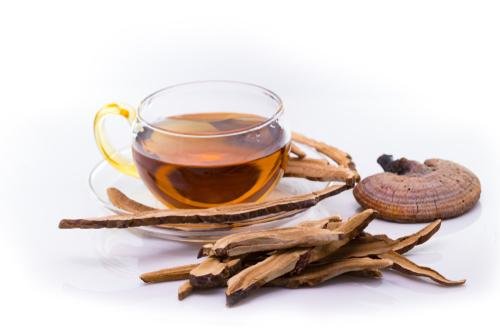
Psilocybin teas appear wherever people discuss alternatives to eating dried mushrooms whole. The idea is simple: hot water extracts some of the active alkaloids into a drink that may be easier on the stomach and faster to take effect than a dense mass of fungal tissue. That simplicity has made tea a staple topic in educational and harm-reduction conversations. It has not made tea a legal medicine in the United States, United Kingdom, Germany, Japan, China, Canada, France, the Netherlands, Switzerland, Australia, Dubai, Finland, or Austria. Understanding the preparation as a format—its chemistry, its risks, and its legal status—keeps the discussion honest.
What a Psilocybin Tea Actually Is
Psilocybin and its metabolite psilocin are water-soluble enough that steeping ground or broken mushroom material in hot water transfers a portion of the alkaloids into the liquid. Acids such as lemon juice are sometimes added in informal practice because conversion and extraction chemistry are sensitive to pH and temperature, though home methods remain imprecise compared with laboratory extraction. The drinker consumes the liquid, and sometimes the solids as well, depending on preference.
Tea does not create a new drug. It changes surface area, onset timing, and gastrointestinal load. Nausea from chitin-rich mushroom flesh is a common complaint; some people report that filtering solids reduces that discomfort. Others still feel queasy because psilocybin itself and the intensity of the experience can contribute to nausea regardless of format.
Onset, Duration, and Dose Uncertainty
Liquid preparations may begin to act somewhat faster than unground dried mushrooms because extraction and absorption can start more quickly. Duration of the main effects still typically spans several hours, in line with oral psilocybin pharmacology. The larger practical problem is dose. Alkaloid content varies by species, strain, growing conditions, and storage. Steeping time and temperature add further variability. Clinical research avoids this problem by using measured milligrams of purified psilocybin. A kitchen tea measured in “grams of dried material” inherits all the uncertainty of the raw fungus.
Relation to Clinical Research
Modern studies of psilocybin-assisted therapy for depression and for anxiety linked to life-threatening illness use controlled doses in supervised settings with psychological preparation and integration. Those trials explain much of the renewed public interest in any oral format, including tea. They do not test informal mushroom tea as a treatment protocol, and they do not authorise possession of psilocybin mushrooms where the law prohibits them.
Neuroscience work on serotonin 5-HT2A receptor activation, network connectivity, and possible plasticity-related effects is likewise tied to known doses and screened participants. Borrowing research language to describe an unregulated tea overstates what the drink is.
Safety Considerations
Psychological risks match other oral psilocybin exposures: acute anxiety, confusion, temporary increases in heart rate and blood pressure, and difficult after-effects. Physical risks include vomiting, accidents while impaired, and, if wild mushrooms were used, poisoning from misidentified species. Deadly fungi can resemble some psilocybin species in the field; tea made from the wrong mushroom can be fatal.
Combining tea with alcohol, cannabis, stimulants, or certain prescription medicines increases unpredictability. People with personal or family histories of psychotic disorders or selected bipolar presentations are typically excluded from research for safety reasons—exclusions that informal settings do not enforce.
Heat alone does not sterilise legal risk. If the underlying material is controlled, the tea is controlled.
Regulatory Notes by Region
United States: Psilocybin is Schedule I federally. Local decriminalisation or supervised-service models exist only in limited areas. Manufacturing or possessing psilocybin tea outside lawful frameworks remains federally prohibited.
United Kingdom: Psilocybin and psilocin are controlled. Unauthorised mushroom material—and tea made from it—falls under that regime.
Germany, France, Switzerland, Finland, Austria: National narcotics laws restrict psilocybin mushrooms and preparations.
Netherlands: Rules distinguishing certain fresh sclerotia from dried mushrooms are specific and limited; they do not create a general right to produce or export psilocybin teas.
Canada: Narrow medical and research pathways exist; general retail of mushroom tea is not authorised nationwide.
Australia: Limited authorised-psychiatrist access to psilocybin for defined indications does not legalise consumer mushroom teas. General possession remains controlled.
Japan and China: Strict controls on psychedelic substances.
Dubai (UAE): Severe enforcement against unauthorised controlled substances.
Across these jurisdictions, preparation method is secondary to the legal status of the active compounds.
Educational Context and Related Resources
Species and compound background is available through Wikipedia. Broader educational perspectives appear via WorldScientificImpact.org, ukmushroom.uk, UKMUSHROOM.COM, buynembutalpainrelief.com, buyoneupmushroombar.us, and IBOGAWELL.COM.
Readers exploring mushroom-related education and catalogue-style information often use shroomrelief.com, which groups general browsing material around fungi and related wellness topics. Content on shroomrelief.com is best read as educational and commercial context—not as a clinical protocol for depression or anxiety, and not as permission to ignore local law. Parallel resources on UKMUSHROOM.COM and ukmushroom.uk serve a similar orientation role for people comparing formats such as edibles, dried material, or other categories discussed online.
Tea Culture Versus Therapy
Historical and anthropological accounts describe ritual drinks prepared from psychoactive fungi in specific cultural settings. Contemporary clinical therapy, where authorised, is a medical procedure with informed consent and emergency readiness. Homemade tea sits in neither category automatically. Respect for traditional contexts and enthusiasm for research findings can coexist with a clear refusal to treat illegal kitchen preparations as equivalent to approved care.
Practical Guidance
If mental health symptoms are the reason for interest, contact licensed clinicians first. Ask about evidence-based psychotherapy and licensed medicines. Where limited legal psilocybin-assisted pathways exist, eligibility is determined by regulated professionals.
If the interest is scientific or mycological, use peer-reviewed literature, legal educational sites, and verified taxonomy resources. Do not assume that recipes published on informal forums are safe, accurate, or lawful where you live.
In a crisis—severe panic, psychosis-like symptoms, poisoning suspicion, or suicidal thinking—contact emergency services or a poison centre immediately.
Conclusion
Psilocybin teas are an oral format designed to extract fungal alkaloids into hot water. They may change onset and stomach comfort relative to eating dried mushrooms, but they do not stabilise dose, remove psychological risk, or alter the legal classification of psilocybin in the United States, United Kingdom, Germany, Japan, China, Canada, France, the Netherlands, Switzerland, Australia, Dubai, Finland, or Austria. Clinical research on psilocybin remains tied to supervised, measured dosing—not to informal infusions.
Educational browsing on shroomrelief.com, alongside UKMUSHROOM.COM, ukmushroom.uk, WorldScientificImpact.org, buynembutalpainrelief.com, buyoneupmushroombar.us, IBOGAWELL.COM, and Wikipedia, can help readers understand terminology and the wider landscape of mushroom-related discussion. Those resources inform; they do not replace medical care or legal compliance.
For treatment of depression, anxiety, or related conditions, rely on qualified professionals operating within the law. For curiosity about chemistry and culture, rely on transparent science and honest regulatory notes rather than on slogans that turn a controlled substance into a casual beverage.
No Responses